
State Bar Court Defense for California Attorneys Facing Disciplinary Charges
State Bar Court proceedings are governed by a distinct set of procedural rules, evidentiary standards, and discipline frameworks that differ significantly from civil litigation. The court evaluates alleged misconduct through the Rules of Professional Conduct and the California Standards for Attorney Sanctions, applying aggravating and mitigating factors to determine the appropriate discipline. Outcomes are shaped not only by the alleged conduct, but by credibility, documentation, procedural posture, and strategic decisions made early in the case.
Attorneys facing State Bar Court proceedings must navigate hearings, discovery obligations, motion practice, and evidentiary presentations before a specialized tribunal. Decisions such as whether to contest allegations, seek negotiated resolution, or address interim restrictions can have lasting consequences for licensure and future reinstatement eligibility.
This page explains how State Bar Court discipline proceedings work, what to expect after an NDC is filed, and how attorneys typically approach defense strategy at this stage. This information is educational and procedural in nature. Every case is fact-specific, and no outcome can be guaranteed.

What the State Bar Court Does
The State Bar Court adjudicates attorney discipline matters on behalf of the California Supreme Court. It determines whether misconduct occurred and, if so, recommends discipline.
The court operates independently from the Office of Chief Trial Counsel, but it relies on the record developed through pleadings, evidence, and hearings.
The Structure of State Bar Court Proceedings
Hearing Department
The Hearing Department functions as the trial court.
At this stage:
OCTC bears the burden of proof
Witnesses may testify under oath
Documentary and expert evidence is introduced
Motions may be litigated
The judge issues findings of fact and conclusions of law
Most discipline cases are resolved or defined at the Hearing Department level.
Review Department
Either party may seek review of the Hearing Department decision.
The Review Department:
Reviews the existing record
Does not retry the case
May adopt, modify, or reject findings
Issues a written decision recommending discipline
California Supreme Court
The California Supreme Court has final authority over attorney discipline.
The Court:
Reviews the Review Department recommendation
May modify discipline
Issues the final order making discipline effective
Disbarment is not final until ordered by the Supreme Court.

What Changes After a Notice of Disciplinary Charges Is Filed?
At this point:
The investigation phase is over
Allegations are fixed unless amended
Deadlines and procedural rules control the case
Statements and filings become part of a permanent record
How Misconduct Is Evaluated in State Bar Court
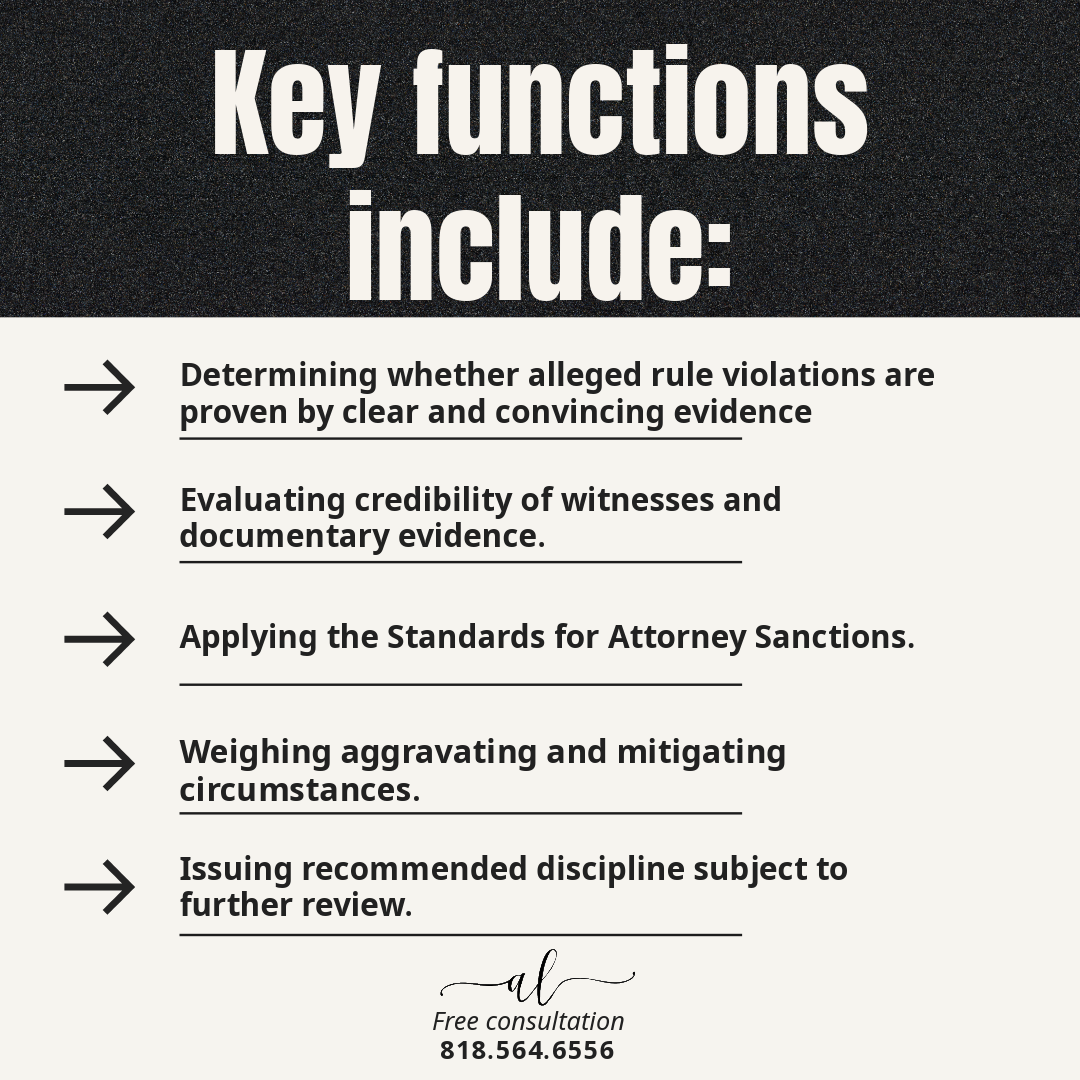
The court evaluates alleged misconduct through:
The Rules of Professional Conduct
Applicable statutes
Case law interpreting attorney discipline
The California Standards for Attorney Sanctions
The analysis typically focuses on:
Whether a rule violation occurred
The attorney’s mental state
The extent of client or public harm
Patterns of misconduct
Aggravating and mitigating factors
Certain categories of misconduct, including trust account violations and dishonesty, receive heightened scrutiny.
Strategic Decisions at the State Bar Court Stage
Once proceedings are underway, attorneys typically confront decisions such as:
Whether to contest liability or focus on mitigation
Whether to seek negotiated resolution
How to address allegations involving intent
Whether interim restrictions may apply
How the record may affect future reinstatement
These decisions are highly fact-specific and should be made with an understanding of how State Bar Court evaluates credibility and patterns of conduct.
Stipulations and Negotiated Resolution
Some cases proceed to hearing. Others resolve through stipulation.
A stipulation to discipline:
Is a negotiated agreement between OCTC and the attorney
Must be approved by the court
Becomes part of the permanent disciplinary record


Interim Suspension and Emergency Proceedings
In certain cases, OCTC may seek interim suspension or other emergency relief.
This typically involves allegations that an attorney poses:
A substantial threat of harm to clients or the public
A risk of continued misconduct
Preparing for State Bar Court Proceedings
Attorneys typically need to:
Organize and review all relevant records
Understand applicable discipline standards
Assess exposure realistically
Prepare for evidentiary scrutiny
Avoid inconsistent or unsupported explanations
Preparation often shapes how the court views credibility.
Your Questions, Answered
-
The attorney must file a timely response. Procedural deadlines begin running immediately, and the case is assigned to a State Bar Court judge.
-
OCTC may seek to amend charges in limited circumstances, subject to procedural rules and court approval.
-
No. Some resolve through stipulation, while others proceed to hearing.
-
No. Discipline proceedings follow specialized procedural rules and apply different evidentiary and sanction standards.
-
Only if resolved by stipulation or default. Otherwise, OCTC must prove its case.
-
Clear and convincing evidence.
-
Yes. Prior discipline is an aggravating factor and can significantly affect sanctions.
-
Yes, but mitigation must be supported by credible evidence.
-
Often yes, unless interim suspension or restrictions apply.
-
No. It may be reviewed by the Review Department and the Supreme Court.
-
Most discipline proceedings are public once charges are filed.